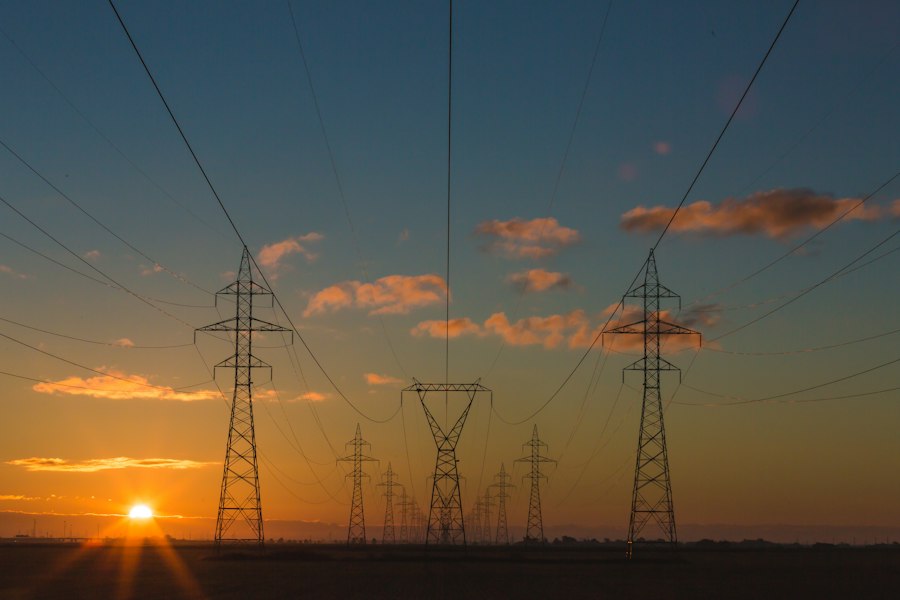
Every megawatt needs an address. We follow the land, grid connections, consents and buildings that the industrial build-out physically depends on.
Home / Focus areas / Real Estate
What this covers
The part of the transition that is a property question.
Electrolysers, fuel plants, battery storage, data centres and logistics all compete for the same scarce combination: land with a grid connection, planning consent and access to transport. That combination is now a real-asset market in its own right.
We follow it as property: who controls the land, what the connection date is, how long consent takes, and what the resulting asset is worth to an occupier who has no alternative site.
Land assembly, options and strategic site control
Grid connection queues, capacity and connection dates
Planning routes, consent timelines and objection risk
Occupier demand from industrial, energy and logistics users
The obligation
What determines whether a site is viable.
A site is not viable because it is available. It is viable because these four things line up on a compatible timetable.
Grid connection
Queue position and connection date — increasingly the single largest driver of industrial land value.
Consent route
Which planning regime applies, how long it takes, and the realistic objection profile.
Access & logistics
Road, rail, port and pipeline access, which decides what can actually be built there.
Occupier demand
Who needs the site, what they will sign, and whether the covenant supports development finance.
What decides the outcome
Three things we keep returning to.
Queue
The constraint that reprices land
Connection date has become a more important attribute than location.
Consent
The timetable everything else waits on
Consent duration sets the earliest possible revenue date.
Covenant
What makes a scheme financeable
The occupier’s credit, not the sector narrative, funds the build.
How a project gets built
The four stages, and where they stall.
STAGE 01
Land & options
Site identification, option agreements and the promotion route taken.
STAGE 02
Grid & consent
Connection application and planning, usually running in parallel and rarely at the same speed.
STAGE 03
Development
Construction funding, contractor procurement and delivery against the connection date.
STAGE 04
Lease & operate
Occupier agreement, term, indexation and the investment case that follows.
Where the friction is
The grid connection date is now the asset.
Two otherwise identical sites can differ in value by a wide margin purely because one has a viable connection date and the other has a place in a queue that runs well into the next decade.
That has changed how industrial land is valued, optioned and traded. We follow connection reform, queue management and the consenting regime because they now drive the property market more directly than conventional demand measures.