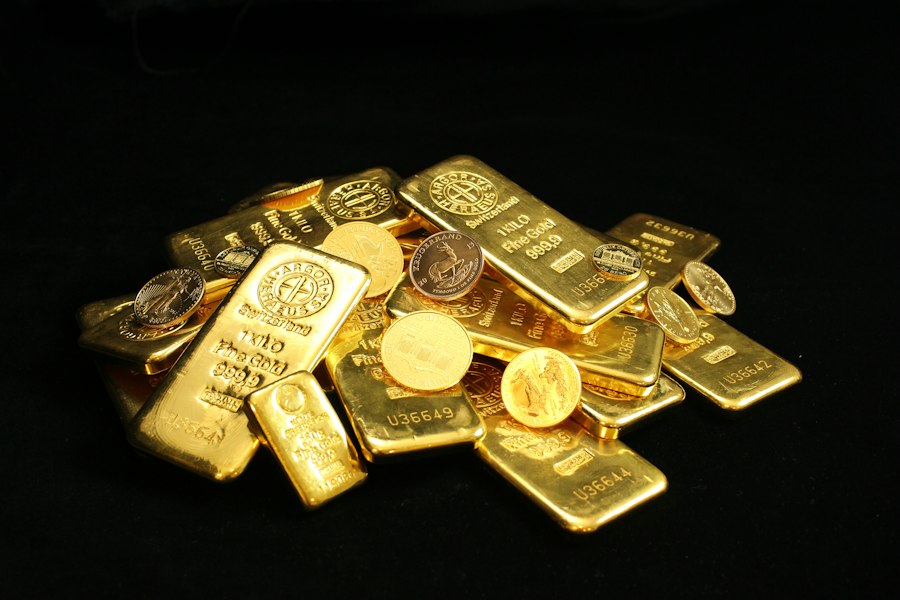
Bullion coins are the oldest store-of-value instrument still in daily use. We follow the demand behind them, the tax treatment that shapes what people buy, and the mechanics — premium, storage, provenance — that decide what a holding is actually worth on the way out.
Home / Focus areas / Gold Coins
What this covers
A market with no cash flow and a very long memory.
Gold produces no earnings, pays no coupon and has no management team. What it has is several thousand years of continuous monetary use, deep global liquidity, and settlement that does not depend on any single institution staying solvent. That combination is why it reappears on balance sheets whenever confidence in paper claims weakens.
Coins are the retail-scale form of that market. We cover the chain from refinery to dealer to vault, because in physical gold the difference between a good holding and a poor one is usually operational rather than directional.
Bullion coin demand, premiums and dealer spreads
Central bank purchasing and official sector reserves
UK tax treatment of investment gold and legal-tender coins
Storage, insurance, assay and provenance
What moves the market
Four forces behind the price.
Gold has no earnings to discount, so its price is set almost entirely by the cost of holding it and by demand for the thing it substitutes for.
Real interest rates
Gold pays nothing, so it competes directly with the real yield on government debt. When that yield falls, the cost of holding gold falls with it.
Central bank demand
Official sector buying has become a structural bid, driven by reserve diversification rather than by price.
Currency and inflation
Gold is quoted in dollars but held against debasement everywhere. The local-currency price is what most holders actually experience.
Counterparty risk
Demand rises when the question stops being what an asset returns and becomes whether a claim on it will be honoured at all.
What decides the outcome
Three things we keep returning to.
Spread
The number most buyers overlook
Premium over spot on the way in plus the discount on the way out — together they set the real cost of the position.
CGT
Why the choice of coin is not cosmetic
In the UK, certain legal-tender bullion coins sit outside capital gains tax. Form matters as much as metal.
Assay
What makes a coin easy to sell
Recognised mint, intact packaging and clean provenance decide whether an exit takes a day or a month.
How an allocation is made
The four stages, and where they cost money.
STAGE 01
Choose the form
Coin or bar, which mint, what size. This one decision sets the tax treatment, the premium paid and how easily the holding can be broken up later.
STAGE 02
Buy and verify
Dealer selection, the price basis quoted, payment route, and the checks that establish the coin is what it claims to be.
STAGE 03
Store and insure
Allocated or unallocated, at home or in a vault, held in whose name, and insured to what value.
STAGE 04
Exit
Who buys it back, at what discount to spot, and how long settlement actually takes.
Where the friction is
The metal is the easy part.
Spot price is public and identical for everyone. What differs between two holders of the same quantity of gold is what they paid over spot, what storage costs them each year, whether the metal is allocated in their own name, and what discount they accept when they sell.
Those four items can quietly absorb several years of price appreciation without ever appearing on a chart. We cover them in detail because that is where the outcome is actually decided.
Coins are more divisible, easier to sell in part, and in some jurisdictions carry a different tax treatment. Bars usually carry a lower premium per ounce. We cover both and set out the trade-off.